Wednesday, 10 September 2014

Professional Module: Working Internationally

Yesterday entailed a session into the international possibilities of working, particularly in art and design. It was pointed out that "working internationally" wasn't simply defined as working abroad. It could mean a number of other things in the sense of being a UK citizen, like:
  • Working for a foreign-owned employer in the UK
  • Working for a British employer overseas
  • Working outside of your home city
We also looked at companies such as Thorntons (started in Sheffield, then expanded from there over the decades), Clarks (founded in Somerset, then expanded to an international scale where they even sell through third-party distribution). I even considered Boots as a side note, due to a friend who works as a buyer for them, and has thus travelled abroad on their behalf.

This lecture then boiled down to the inexorability of the global dimension, especially if I was pursuing a career in art and design. So, I've been left to consider what my international options are. It's not like I haven't before, though. There are companies out there whom I'd like to work for, but they are big leaps:
  • AllofUs, when the opportunities arise.
  • United Nations, provided I can put myself across as an "exceptional individual," as I've frequently been told.
  • And a few others.
The question was raised about the feasibility of working outside the UK and how many students travel abroad for work. It was pointed out that 3% of NTU graduates ended up working as such. Even then, 1.5% of that turnout were UK students working abroad, the other being international students returning home. This may seem small, but if the numbers for the NTU population are around the same as 2011/12, that equates to roughly 800/900 individuals taking up their careers abroad. 

There's also the issue of language barriers. But in this discussion, it was claimed that this is not such a big problem. Education (especially higher education, which is a big international business that one can work into), design and IT are said to be unrestricted to English-speaking countries. One can even teach English abroad, without a degree in English or a modern language. 
However, I think it would be twice as useful to know another language, because while English speakers are not as impaired in their career paths by language barriers abroad, knowing another language still opens up more doors of opportunity. Throughout my time at NTU, I've taken to learning French on and off, and plan to pursue it further after this course. French appeals to me, because I find it easier to pick up as opposed to other languages. Plus, I really like French films. 

This is all a rough outline for my options outside of the UK (or just Nottingham), but I tend not to put too much detail into it. I still have a lot left to do in Nottingham first, like my work with the Surface Gallery. 

Professional Module: Personal Brand

I was a little frustrated and impatient in this one, but then that's two hour long sessions for you. This was a lecture and a workshop into defining yourself and your image in the professional sphere of creativity; be it fine art, design, photography or anything else. By then, I had my artist CV in the works, and a working image/symbol to give myself a professional identity. Yes, I was studying a master level in interaction design, but I still largely define myself as a practitioner in the contemporary arts, hence my delving into the interactive arena of that practice.

Anyway, we looked at a few usual suspects like Apple and Nike, whose brands you'd now recognise without even being told the name of the company.


Here, we need to consider what a person communicates when wearing a brand or using a product of one, which I think goes hand-in-hand to identifying the personality of a person based on their fashion sense.

Here are a few images for a brand, for my artist/designer CV, my website when I get it up and running, and business cards (doodled during the lecture):


I have a thing for eyes, and the Eye of Providence in particular, even though I don't necessarily have the outlook of a Mason. The significance of eyes, to me, draws on that of the beholder and what one perceives. Given that my aspiring career follows the art/design route, I've deemed a lot of images with eyes quite fitting to symbolise the perception of my own work - I appreciate those who LOOK. Even if they don't like my work, at least they looked and made their own perceptions.

I haven't done a final brand design yet, but these are a few ideas knocking around.

Monday, 8 September 2014

Professional Module: Entrepreneurship

Playing catch up from last week:

Entrepreneurship
Now, this was an interesting lecture on the entrepreneurial mind-set. It delved into what the entrepreneur is. There were some good discussions and insight into the likes of Bill Gates, Steve Jobs, Duncan Bannatyne, Richard Branson. We looked into how they all started out, what risks they took, what setbacks they went through in their business endeavours, and the factors that contributed to their success.


We also delved into the 10,000 hour syndrome, or the 10,000 hours of practice, where it is claimed that it takes such an amount of time - equating to 5 years - to achieve mastery in a chosen field.
I find the note in the link about "natural talent" curious, and it reminded me of a discussion I once had about "natural talent" vs. "rigorous practice", to which I believe both compliment each other. But then I wonder about the savants who display exceptional skill in something, to the point beyond normality, like playing a violin, solving a complex mathematical problem in minutes, or painting an exquisitely detailed picture. Granted, this is a neurological occurrence. But would it also be due to genuine interest? Would I, by now, be competent with coding, had I applied at least two hours a day to learning it? I doubt it, because I'm not *that* interested in doing so. And I've tried to. I just like the results they often yield, but I often dislike doing the footwork.


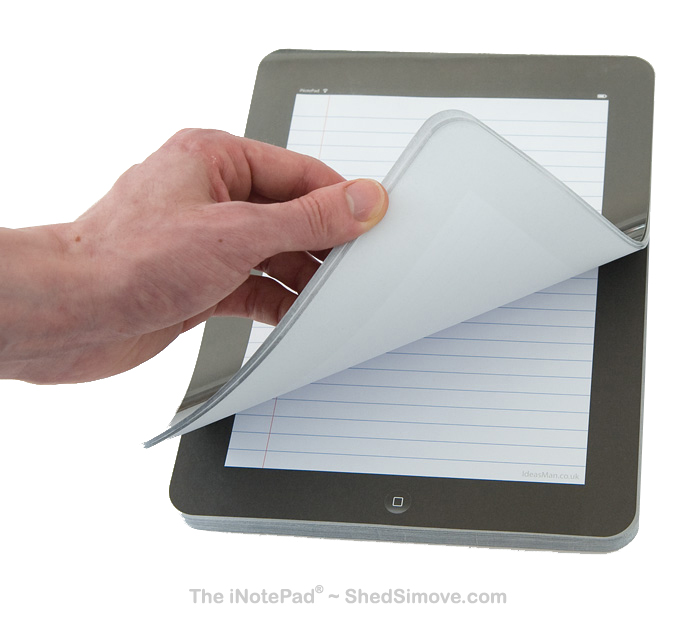
Anyway, the lecture also drew insight into Shed Simove - a performer, author and entrepreneurial mega-troll. He made the iNotePad - an actual notepad that resembled the iPad, which pissed off Apple. He also launched a book called 50 Shades of Grey - a book that literally contained fifty various shades of grey, which also annoyed the publisher of E.L James' best-selling book that it was named after. Unconventional he may be, but successful in his own unique way, nonetheless.

The lecture also covered contact with the Hive - NTU's enterprise engine for entrepreneurship, which would prove very useful if I ever come up with a business idea of my own. In terms of my own art practice, however, I'm not sure how they might help.

Ultimately, this lecture boiled down to the defined features of an entrepreneur, they are, as this lecture goes:
  • Self-Motivated
  • Ridden with high needs for achievement
  • Assertive
  • Willing to take calculated risks
  • Independent and innovative
  • Often "misfits" in their society
An entrepreneur is largely defined as "someone who takes risks to create a new process."

Thursday, 4 September 2014

Professional Module: CV Template, Work and Artist

Here are two templates that I am currently working with, both as a default for prospective employers and art galleries (should I end up deciding to take up a studio residency or commission). 

Work CV template:

I have worked with this template for years, even though I have not had to use it very much in my applications to past and current employers, usually due to an application process, but it has also helped me to refer to key points of my professional career path.


The major change I would put to consideration involves the reference section, as this would add a great deal more of space to my second page, and prospective employers can still have this information upon request. But then this would also depend on the employer that I've applied to, as name dropping certain people within the same company, for instance, will do the applicant some favours. 

Artist CV


As far as I have it sussed out in my head, this CV was made for the purpose of selling myself as a freelance artist and designer. Nearing the end of this course has compelled an assessment of all that I've done in the art world, and where I need to take it next, and this Artist CV is the first of my endeavours for the latter: converging it all to a selling point and getting myself onto more creative projects and commissions as a practising artist. It is a CV will require more construction as I go along, which will then be accompanied by a portfolio, website and wad of business cards. 

Monday, 1 September 2014

Professional Module: CV and Cover Letter workshop/discussion

I am returned to the last dregs of this MA course, and as a result find myself to be in a bit of an existential limbo. However, I do feel that this will be the most important and informative module. Now that the thematic contents of my project are out of the way, we are being told to highlight our plans for the future, professional world. In my case, this would involve the world of visual arts and design.

The module was started off today with an insight into the very basics of making a CV, which I admit was a step above the mediocre, mandatory workshop at a job center in a doomed town with no prospect. It was slightly more interesting, because it was tailored towards creative students.

Anyway, to recap on some particular aspects of the lecture:

Covering Letter
What is a Covering Letter?
  • This is a professional business letter that demonstrates one's career interest and highlights relevant strengths and experiences. 
  • It selects key aspects of your CV and matches them to the needs of your potential employer. 
  • It introduces you to the reader and should stimulate interest to your application. 
  • It should show real interest in working the specific job that you have applied for.
What should a Covering Letter contain?
  • As an opening, it needs to say whom you are for a start, state which job you are applying for, where you spotted the advertisement (if it was an advertised position).
  • You should explain in the main body why you are interested in this particular job, evidence your knowledge of the company as well as your interest into the contents and nature of the job.
  • State previous experience, special skills and interests and knowledge that make you suitable, referring to selected experiences on your CV.
  • At the end, indicate your availability for interviews, then close politely and positively.
Tips
  • Always send it to a named person and not a title. Ring if necessary.
  • Keep it brief and to the point
  • Research the target company and tailor every application to the specific company and role
  • Consider "why you over the hundreds?" and "what's in it for the employer?"
Things to avoid
  • Cliches that suggest a lack of imagination and independent thought e.g "I think I can honestly say..." and "May I take the liberty of..." 
  • Negative aspects e.g "Although I am only 19..." 
  • Imprecise words like Quite, Fairly, Almost etc.
  • Generalisations and unsupported claims e.g. "I am a good team player."
CV

This was a very basic look into the structure of the CV, what it is (Curriculum Vitae - Latin for "Path of Life"), how you structure one, examples of various templates and what you should/shouldn't include. This will be highlighted in the next post with my own example template. The generally agreed structure of a CV in this session was the one I was already using. 

IxArt - project outcome recap

It's the 1st September, which marks the beginning of this MA study's last element: professional report. But before I start writing about this, I want to highlight some of things that have occurred during the my third module: the project outcome.

Coniglio Trial, Bohunk Institute
July was a fairly stressful month, and I don't refer to workloads, here. A couple of days before the private view of the Open 2014 at Bohunk Institute, the gallery space was burgled. The culprits didn't take a great deal of many things, but unfortunately, the MacBook Pro that I had borrowed from the university was one of the items taken. This greatly affected my work, and there was very little time to make amends for this upsetting. So, I had to cancel my shift at work (7.30 til 19:45 - full 12 hour shift), in order to come in, give a police statement and use my own, slightly more rubbish Mac to get my piece up and running. It's amazing that I managed to do this before the private view, and it was generally well received, from what I've been told. Despite the slower quality of my own laptop's performance (a further incentive to invest in a newer one), one was able to notice the interactive nature of the piece. As I pointed out, the static side was not really acknowledged as such, mainly due to being out of site and facing the wall. 

Moral of that time, ultimately: when using a laptop for an artistic piece, invest in a kensington lock and don't leave such stuff loose in another building, even if others are adequately looking after it for you.

Tangible Projection
This endeavour was put on hold due to facility access and other technical, logistical difficulties. I highlighted in my documentation that the greatest issue with this piece was a projection mapping matter. The screen, I felt, wasn't the right dimension, and I should have been more considerate in this area. So, I intend to have another one made, which is more suitable for the mapping and, perhaps, transport. 

I did not submit this as a piece for the MA degree show at Nottingham Trent for several reasons, which I will highlight:
  • Facility access - due to Bonington and Waverley being shut over August, I could not feasibly come in to experiment further and develop this in time for the MA show. Had they both been open. then it might have been a different story.
  • The logistical requirements for an exhibiting space in the MA show meant that my piece, which is light sensitive, electrical and demanding of very specific dimensions of physical space, could not be accommodated. They were not friendly towards projections outright, which in my opinion was logistically unreasonable, especially as I know of the amount of rooms and space the Bonington building actually has.
  • I categorically refused on principle, because I disagreed with the selection process on the work of MA students, who have paid upfront on their tuition fees. And yet, they are subjected to more worry and scrutiny of whether or not they get to show the outcome of their projects, which they have been extremely passionate about. So, on that principle, the university does not deserve to have my work displayed. I'll exhibit the ambitions of my creative practice elsewhere. This rationale might be seen as arrogant, but it is still unfair in comparison to undergraduate students, who automatically have an exhibiting space.
  • There are other domains in which I could exhibit this piece to the wider art community, and highlight the interactivity of a tangible piece that a spectator can feel inclusive towards. It might even be a part of the next Light Night event, given my collection of contacts from the last one.
Summary
  • Coniglio Trial was successful, albeit many a headaches, curses and setbacks, and may have gone to some lengths of answering my project question.
  • Tangible Projection will not be exhibited at the MA Expo (Post-graduate Exposition), but will be pushed into the public sphere instead.

Monday, 21 July 2014

Coniglio Trial, now at the Bohunk Institute (part 2)

So, everything is more or less set up at the Bohunk Institute, with a few minor modifications to take place after this assessment (Tuesday afternoon). Basically, I need to fit the static piece I have mentioned in my documentation into the unit properly. They've curated it in a way that doesn't warrant much notice of the other side, but it is next to a flight of stairs where people *can* see the back... and I don't like that they'd be able to see the back of the installed screen, so static art is still going in. But this is how it looks so far:


So, it's now in the public sphere, and I'm excited to mention the private view this Friday. I'll be working, but making my way over afterwards, to document everyone's interactions (and sip some wine).

I've documented both Coniglio Trial and Tangible Projection up to this point in nice shiny paper form, so everything else will be reported post-presentation and outside of Nottingham Trent, which will then wrap this IxArt project up... and hopefully open up new creative avenues. 

Helsinki - some interactive art

I visited a museum, with some semblance of interactivity. Forgot to post about this last week. It's not all been *work work and more project work* throughout this month. I did take a bit of a weekend away, just to clear my head, but keep in touch with the arts and culture and explore new ones in different countries. In this case, Helsinki, Finland. 

I went to the Kiasma Museum of Contemporary Art, and found some very good pieces of work as part of a long-term collection by the museum, which they decided to display when I was visiting. This one in particular, stuck out: 


It felt like I was walking through what seemed like a hundred ribbons. I guess the colour helped in a psychedelic traversing, but what really strikes me is the tangibility of such an installation. This is the point I myself am exploring with Tangible Projection: eliminating that boundary of static and purely visual art for the viewers; not necessarily to compel them into the artwork, but to extend the option of immersion. 

Sunday, 13 July 2014

Coniglio Trial, now at the Bohunk Institute

My Isadora piece was selected for Bohunk Institute's second annual open exhibition, so I've taken to cleaning it up, chopping its annoying edges off and making the tapered compartment at the base a bit easier to access. I've also got new effects that tie around the certain black & white line aesthetic I've been using for my Tangible Projection piece.

This is how it turned out in the workshop:

I also hired a van to transport it across town on the weekend. The unit is now resting at the Bohunk Institute, where it will be set up properly next Sunday, with the canvas piece that I've been working on attached to it.

Monday, 30 June 2014

Tangible Projection - morph!

Those horizontal lines I've been harping on about are finally becoming playful via Processing. Now to translate that to the Kinect. 


Tangible Projection - second experiment

Today has involved searching for an unused studio space, sourcing the same projector and working out the right distances of the Kinect's inferred capture. There's a bit of a struggle for corresponding screen resolution at the moment, and finding the most ideal ratio for the Kinect to pick up movement, which is further complicated by the level of light in the environment.

We're getting there, slowly...


The issue here is size and correct mapping. It has been suggested that a taller canvas be made to match a ratio of 640 x 480 pixels, as there was essentially a height problem in terms of Kinect's motion tracking. 145 cm in width is fine, but height could be taller. In fact, it might not even be a case of making a taller canvas, but rotating the Kinect 90 degrees, because it wasn't so much the width that was problematic, but the height. If that's the case, then I should look into a way of elevating and suspending the canvas itself. 

I'm also unsure at this point whether the Epson TW480 might be suitable for rear projection, unless it has a mode for that function, which I've yet to find out by playing with its settings a bit more. If not, then I need to find another projector with such a mode, and one that might be vertical if I do make a taller canvas. 


I can safely say that I've not really done anything like this before, and my departure from traditional Fine Art mediums has been a lot harder than I anticipated. I've had to get my head around programming languages for a start, tap into physical computing, take further considerations for the environment and use other, technological methods to apply an effective visualisation.

Saturday, 28 June 2014

Tangible Projection - first experiment

A couple of days after making the screen, and playing around with the coding, I arranged a dark studio space in order to test the projection and map it out.

The set up consisted of a laptop, projector (Epson HD 480TW), Xbox Kinect and the screen itself. I was borrowing a laptop from my tutor at the time, before my friend arrived with his own laptop, which had all the necessary bits already installed to accommodate Processing. 

I wasn't surprised to find that there were issues in terms of projection rendering and screen synchronisation with the laptop, especially with Processing itself. We were scratching our heads as to how you full-screen the damn thing and have it render accordingly through the projector, but no; they have to be awkward with each other. This will continue in a different yet similar space, most likely in the now-vacant Fine Art studios.

A few problems that should be addressed for the next testing:
  • Sort out screening/projector synchronisation
  • Pinpoint exact distance of Kinect vs. captured motion appearing through spandex.
  • Clean up the coding, especially dimensions if alternatives can't be used for the screening. 
More on this space on Monday, hopefully.

Tangible Projection - screen is ready

Here is an image of the screen in the workshop. One of the technicians made the frame, and I've attached the spandex material. It was done on Tuesday this week. Big enough to serve its purpose, as well as flexible.

Dimensions: 145 x 145 cm

Thursday, 26 June 2014

Kinect and Processing - coding and set up.


I've figured that to achieve my projection idea is to use a Kinect, hence my earlier post on how it works. I've had trouble with admin rights and permissions with the university computers, so I've borrowed a Kinect from my tutor to take home with me and try it out on my own pc, which runs Windows 7. I also referred to Daniel Shiffman's guide to configuring the device to suit Processing. I had a friend, who works at Lockwood Ltd as a coder, help and take me through this. Didn't take him long to figure out Processing, which I was surprised to hear he had no awareness to.

For future references, this is basically what I've done to get the two working together:

1. Installed the Kinect-for-Windows SDK and Developer Toolkit applications - first and foremost thing one needs to do in order to install the hardware properly
.
2. Set up the necessary codes and sources/libraries OpenKinect - a few problems arose out of this, like the imported library SimpleOpenNI which didn't work at first, and compatibility issues between different versions of Processing itself, which were already factors of Mac vs. Windows. but luckily, said friend from Lockwood

3. Set up the pixel and depth resolution settings for the Kinect on Processing.

4. Translated the Processing sketch to the Kinect.

So far, so good; albeit a few brain farts and headaches. A lot of what I had to do now was to build the screen, source the projector and set it all up in a space I've organised at Trent.

Friday, 20 June 2014

Xbox Kinect - depth resolution

Efficient, clever and useful to know, especially for my Tangible Projection idea, which is slowly but surely coming together. 


Tuesday, 10 June 2014

Processing - image warping/morphing

First of all, I find this mesmorising:

Second, this is quite cute:

Thirdly, ye gods this man's work is beautiful! And he's done several more, all in Processing.


Lately, I've been racking my brain around the programming language, which is generally aimed at designers and artists. I have at least figured out how to make static sketches with the code, which is practically basic java/html (the sort that one used to change backgrounds and colour schemes on myspace or vampirefreaks). What I'm trying to achieve by this point is a way to have the mouse hover over the vertical lines I've inputted into the sketch and influence them with morph effects and ripples. Something along that line anyway, but I have lately been struggling with that kind of coding and have asked for help from my tutor. Hopefully, the appropriate code to achieve such intricate effects will be sorted by this week.

Thursday, 5 June 2014

Tangible Projection - a new and additional idea

Bohunk Institute is a 50/50 endeavour that relies on the chance of being selected for my submission, which would mean that I would further enhance the presentation of the Coniglio Trial. That's not even considering how I would get it transported over there.

But does one remember when I was rambling on about some line drawings I was doing back in January?


And theorising its warping in a manner such as this?


Well, I've been toying more with that idea, and how to make such a piece interactive and compelling. The solution I have so far is through Processing, and perhaps the Arduino. I was shown such devices and software some months ago - probably even last year, around November. It was also used during the Light Night project, even though I didn't have the foggiest about how it was used. Over time, I've been learning the computer code bit by bit. My knowledge and skills are still far from adept, but I think there's enough there to achieve what I want from this with some support. 

The other things I will need is a Microsoft Xbox Kinect, which has been known to be a very useful yet very cheap method for infrared capture, and it can be combined with Processing and Arduino. The next thing I need to do is to apply this to a reverse projection, using thin spandex material on backdrop frames to render and map the 'warped line' effect. This is all easier said than done, and I have yet to find a suitable space in which this can be best exhibited. But, hopefully, by the end, I will have what I call a 'tangible projection' that draws on the themes of this project.

There are a lot of other things to consider here, like:
  • What kind of space do I need?
    • I need an exhibition space that can obviously facilitate a darkened room with public access, enough space for a projector and backdrop frame/screen.
  • How much electrical power or how many electrical sources do I need?
    • Electrical power is to be measured (I'm not sure how this is normally done), but in terms of sockets, we have a projector, a Kinect (I don't own one so I don't currently know if they do need a power source, but I imagine that they do), and perhaps the Arduino. The laptop does not necessarily have to stay.
  • How big is this piece going to be?
    • Depends on how big I can make this projection screen and how the rendered result of Processing, calibrated with the Kinect, is mapped onto it. I would like the width to be larger than height, but it does not matter a great deal, so long as the height is roughly 180 - 200 cm. 
  • What kind of projector is needed, and perhaps how many?
    • A HD one, ideally. Epson has been pretty good in this respect. 
There are likely other things to consider, but they have yet to be raised in discussion with my supervisors.

For comprehension, here is a quick scribbling:

Tuesday, 3 June 2014

Atrium Experiment (video clip)

Coniglio Trials


As previously mentioned, I had a video clip which just needed rotating. I'll be including this as an additional element of my submission to the Bohunk. 

Monday, 2 June 2014

Shinier images of the Atrium Experiment (Coniglio Trial)

Before I took the piece away from the Atrium gallery in Bonington and left it back in the MA studio, I took a few pictures of it with a proper camera, and even managed to take a video of it (it's currently filmed in the wrong angle, and I intend to get my hands on a version of Final Cut Pro at uni tomorrow). I will be using these images in my submission to the Bohunk Institute, for their Open Submission in July. 


I will also include the video in on this, just to demonstrate the interactive aspect of it. I've also been working on some non-interactive pieces as of late, due to revising everything in my Learning Agreement. This will hopefully address the vs. aspect of the project if it relates well to the presentation of the updated Coniglio Trial. I think the main thing that needs to be wrestled with here, is how to make the interactive piece more sustainable, which was an apparent weakness of this piece. 

Sunday, 25 May 2014

Gold Factory - in relation to the revised project question.

Because my project has drawn largely on a curatorial perspective and interest, I was also pointed out to Gold Factory, a contemporary art organisation based in Nottingham, apparently based in the Hyson Green area. My supervisor has also been involved with the organisation, so he knew the people personally and kindly indulged to send my details to them via e-mail. The outcome of this correspondence has yet to be seen by extending my contact to them, but if all goes well then it might open some further opportunities and academic milestones for my project. The research space in particular could help to answer parts of my revised project question.